

 Anjee Solanki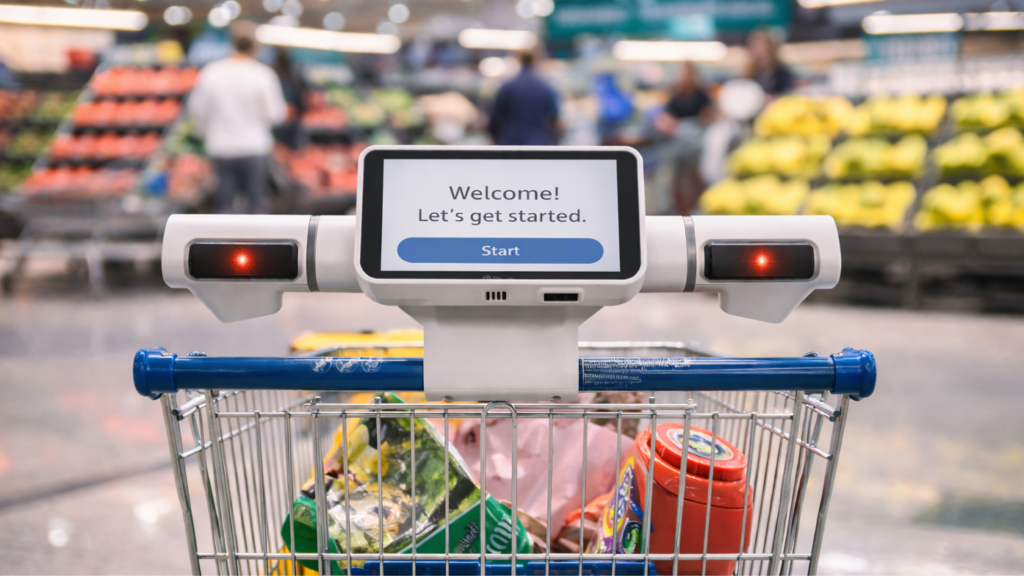
Walmart has partnered with Google to integrate Gemini into its retail ecosystem. The strategic implication for Walmart is concrete, narrowing the competitive gap with Amazon just as AI-orchestrated commerce projects a $3–$5 trillion global retail opportunity by 2030.
The Path to Purchase Just Got Shorter
Historically, the digital path to purchase required multiple steps: search, browse, compare, review, cart, checkout. Agentic AI collapses those stages into a prompt-response-purchase loop.
Walmart’s AI investment clearly supports its mission to (continue to) “save people money so they can live better,” streamlining the shopping experience with AI-generated lists and product recommendations using purchase history. Unlike traditional search, which responds to a single query, agentic AI is purposeful, reasoning through multiple steps, adjusting in real time, and anticipating what the consumer needs next. When planning a party, rather than simply searching for paper plates, consumers can engage the AI in a conversation, “I am hosting a Texas Hold ’em Birthday BBQ for 15 of my closest friends, what do I need?” and receive an itemized checklist with relevant SKUs from Walmart’s inventory with recommendations for things they might have missed.
The rollout will initially integrate Gemini into Walmart’s digital platforms (website and mobile) and Google Shopping to enhance the user experience. The retailer also has plans to implement an AI-powered shopping cart (Fall 2026), further compressing the path to purchase within the chat interface. Unlike smart carts that automate in-store checkout, Walmart’s AI-powered cart reconfigures its own digital discovery — allowing AI to curate and assemble purchases before the consumer ever navigates to a product page.
Based on data from Walmart’s in-house AI shopping assistant, Sparky, customers build baskets that are 35% larger than non-users, a shift that supports Walmart’s decision to prioritize solution-based shopping. If AI-assisted shopping increases average order value, as Walmart suggests, retailers gain a powerful lever for margin expansion.
Implications When AI Curates the Cart
Once you factor in e-commerce shopping cart abandonment rates between 70% to 77% (and even higher for mobile users), AI-assisted shopping is expected to curb “leave it behind” behavior. With reduced cart abandonment, there’s also decreased exposure time for competing brands. If AI curates the recommendation set, brand visibility becomes increasingly dependent on inclusion within algorithmic responses rather than shelf placement or traditional SEO ranking. The likelihood of monetization is not far behind and will likely determine whether sponsored placements or pay-to-play rankings are included in the future.
Can the Competition Keep Up?
According to Salesforce, 75% of retailers say AI agents will be essential for a competitive edge, with well over 90% of retailers fully committed to maintaining or increasing their AI investments. Target has invested heavily in predictive personalization, using past purchase history and behavior modeling to anticipate demand. Shopify is democratizing AI merchandising features, with an expected full rollout by the end of the year to support its small- to midsize businesses in scaling for growth.
What This Means for the Store
AI’s growing role in pre-purchase planning raises questions for physical retail even as Walmart asserts that AI-assisted shopping will allow shoppers more room for “delightful” discovery in their online experience. If shopping wish lists are increasingly pre-curated by AI before a consumer enters a store, discovery shifts to digital channels rather than through aisle navigation. Retailers could leverage AI-generated lists to enhance store mapping, promotions, and cross-category adjacencies once shoppers arrive. The industry question is not whether AI will influence in-store behavior. It’s how retailers intentionally design for it.
As highlighted in our Colliers retail report, nearly 80% of U.S. retailers had already begun integrating AI into their operations, reflecting broad confidence in its long-term strategic value. Retailers, both online and in-store, are moving decisively toward AI-mediated shopping. The durability of this approach will ultimately be determined by consumer adoption and measurable ROI.
Understanding how AI-driven commerce will influence store traffic, portfolio strategy, and market positioning requires informed guidance. Colliers helps retailers and brands navigate these changes — connect with our team to explore what this means for your business.

 Nicole Larson