

 Bret Swango, CFA
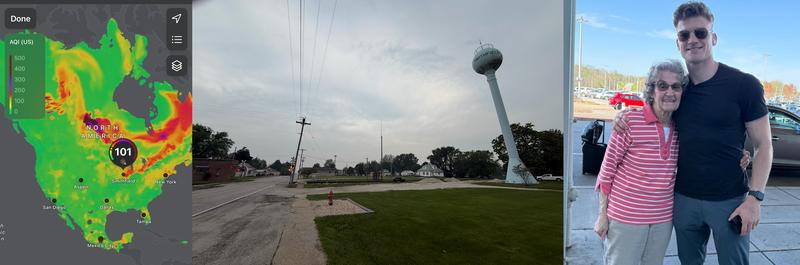
Environmental volatility is no longer confined to coastal metros or wildfire zones. When I visited my tiny hometown of Smithfield, IL (population 300) for my grandmother’s 90th birthday, the air was thick with smoke for only the second time in her lifetime, the first being just a few years ago.
In early June, the Air Quality Index hit 101 — worse than parts of Beijing — due to wildfires in Northern Canada. It was a powerful reminder that air quality degradation is no longer confined to big cities or “fire zones.” It’s showing up everywhere.
The Trend Is Worsening — and Widening
According to the American Lung Association’s 2025 State of the Air report, the number of “unhealthy” red air days has nearly tripled since 2016, and “very unhealthy” purple days continue to climb as well.
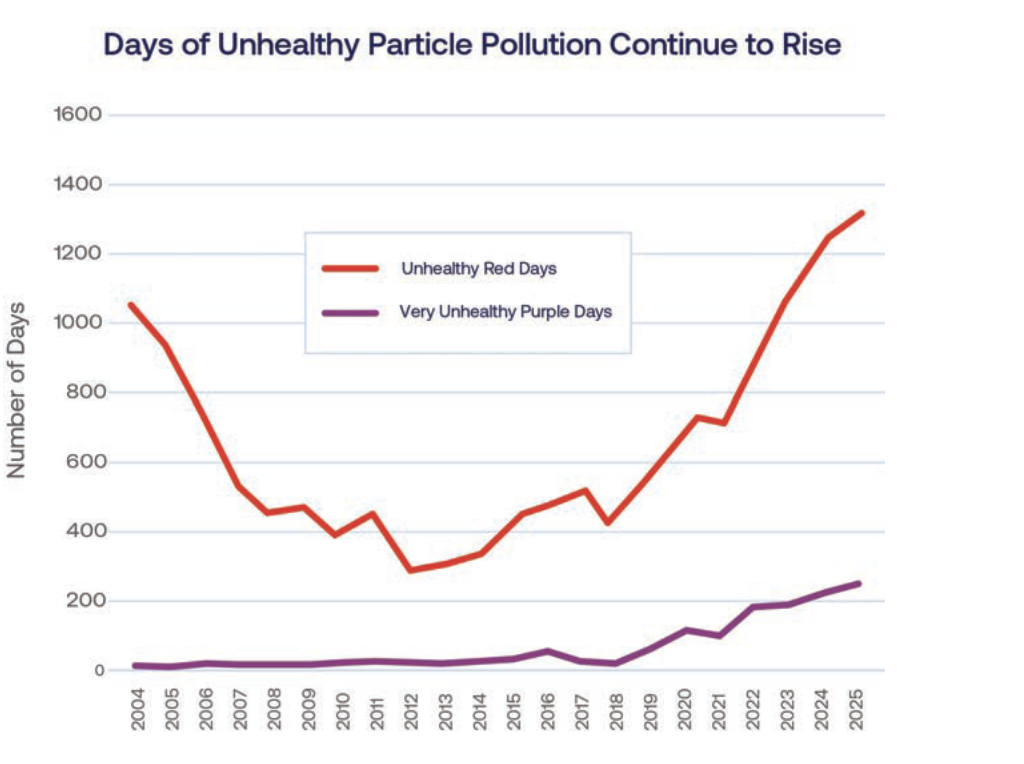
This deterioration isn’t confined to traditional hotspots. The map below shows the steepest increases in ozone pollution, concentrated in a corridor from the Midwest and Plains down through Texas.
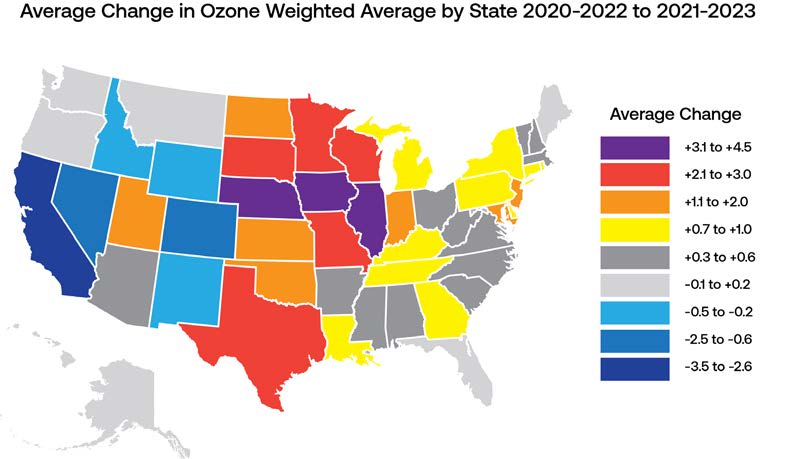
This isn’t just an environmental data point — it’s a directional signal for where operating risk may rise.
Two compounding factors are driving this trend:
- Northern regions face wildfire-driven pollution transported by wind.
- Southern markets battle extreme heat and emissions, creating ozone hotspots.
This north-south corridor overlaps with the western half of the “Affordability Belt,” which stretches from Texas through the Midwest and northeast across the Western Carolinas up to Buffalo. This region, one of the most affordable in the country, has been a major beneficiary of the onshoring movement in recent years.
Major Metros Are Most Exposed
Even the nation’s largest cities are showing signs of environmental stress. All five of the largest U.S. metro areas — New York, Los Angeles, Chicago, Dallas-Fort Worth and Houston — are now among the 25 most ozone-polluted cities nationwide.

This isn’t a collection of one-off events. The trendline is clear: high-growth metros — especially those with sun, sprawl, and smog — are at increasing risk.
In addition to Texas’s two largest metro areas, this is becoming an increasing concern for Sun Belt and Mountain West boomtowns like Phoenix, Las Vegas and Salt Lake City. All of which have become magnets for corporate relocations, yet they rank among the most ozone-polluted metros in the country.
For investors and occupiers banking on long-term talent attraction and operational efficiency, that’s a risk.
What This Means for CRE Decision-Makers
As environmental conditions evolve, so too must site selection strategies. Air quality now touches multiple areas of concern:
- Risk: Regulatory scrutiny and insurance premiums are climbing.
- Speed: Industrial projects locating in non-attainment areas (areas that exceed National Ambient Air Quality Standards for pollutants) can face timing delays due to permitting.
- Talent: Health-conscious workers may avoid high-pollution areas.
- Operating Expenses: Poor air means higher filtration and HVAC costs.
- Cost of Capital: Environmental risk premium is increasingly a valuation driver.
Location strategy is inherently forward-looking. This is one more factor on the already growing list of risks in today’s uncertain operating environment.
A Shifting Policy Landscape
Complicating matters is the uncertain outlook for federal climate policy. Many of the clean energy initiatives catalyzed by the Inflation Reduction Act face potential rollback. With proposals to eliminate core subsidies, many large-scale solar, wind, and battery storage projects may no longer be economically viable.
That creates a real tension: rising climate risk, rising awareness, but potentially shrinking federal support.
CRE stakeholders who integrate environmental performance and volatility into portfolio strategy will be better positioned to mitigate downside and capture “environmental alpha.”
Bottom Line
Air quality isn’t just a public health issue; it’s a location strategy input, a potential cost of capital driver, and increasingly, a market differentiator.
Whether you’re picking the next HQ, underwriting a warehouse, or selecting a future manufacturing location, it’s critical to understand the air quality of the area you’re considering — and the implications that come with it.

 Joe Fetterman
 Jeffrey Myers
 David Burden
 Frank Petz
 Don Moss
 Monty Turner
 Marianne Skorupski