

 Matthew Johnson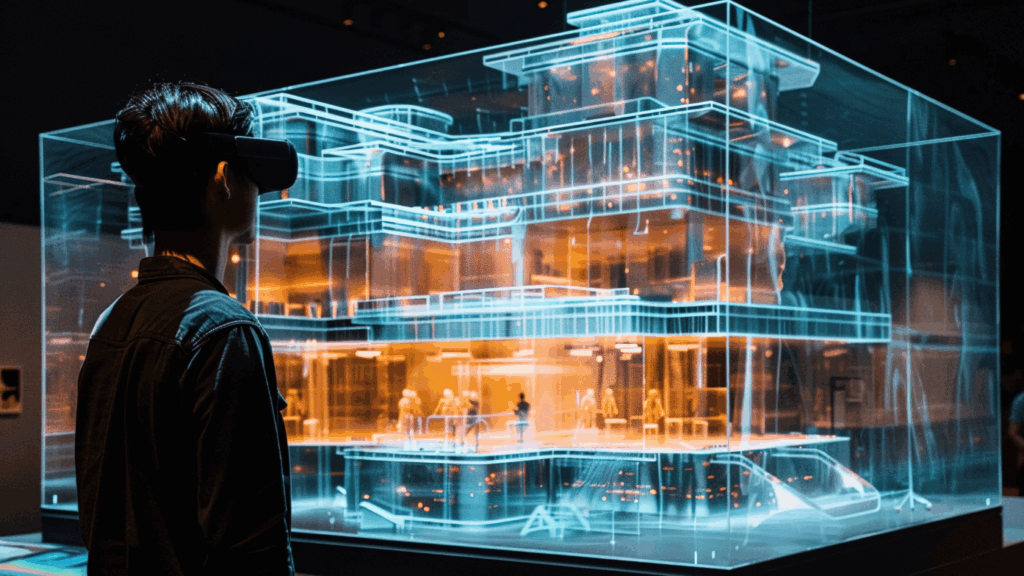
Artificial intelligence (AI) is rapidly transforming nearly every major industry — from how we shop and travel to how we receive healthcare. In the healthcare sector, AI is not only streamlining diagnostics and treatments; it’s also reshaping the way we design and manage the spaces where care happens. As demographics shift, the rise in outpatient services and the push toward value-based care continue to pressure existing infrastructure. Healthcare systems are turning to AI to create smarter, more adaptive real estate solutions.
By 2035, according to PwC, healthcare will be hyper-personalized, digitized, and AI-enabled. This future isn’t decades away—it’s already unfolding in how we plan, build, and operate healthcare environments.
Predictive Design: Using AI to Anticipate Healthcare Needs
AI gives healthcare designers and real estate developers a powerful edge in anticipating future demand. By analyzing local population health data, AI tools can forecast the need for specific services, from oncology centers to urgent care clinics. This enables stakeholders to right-size facilities and allocate space in ways that match projected usage.
Architects can simulate how changing demographics or health trends will impact facility needs over time, ensuring that today’s investments are equipped for tomorrow’s challenges. Per Gensler, AI modeling supports planning decisions at every level — from room adjacencies to waiting room capacity — and even guides workflows. By mapping optimal staff circulation patterns, AI can reduce fatigue, improve efficiency, and increase time spent with patients.
As noted by the American College of Healthcare Executives, “AI can smartly summarize problems such as understaffing and congestion and offer recommended actions with impact analysis… If the solution detects a possible risk in any area of the hospital, it can offer mitigations to flex other assets and resources.” In other words, AI doesn’t just inform static design — it helps prepare facilities to respond dynamically.
Smart Facilities: Designing Intelligent, Adaptable Spaces
The integration of AI extends well beyond the planning stage. Today’s facilities can be outfitted with AI-powered systems that manage everything from lighting and HVAC to patient flow and wayfinding.
These intelligent building systems reduce operational inefficiencies and support a better patient experience.
Sensors and machine learning algorithms enable facilities to respond to real-time patterns in usage. This kind of intelligent adaptability can help balance energy usage and minimize patient wait times.
Design flexibility is also a key benefit. Modular layouts, informed by AI-generated insights, allow health systems to adjust service offerings as community needs evolve. Spaces can be repurposed quickly for different clinical functions, reducing the need for expensive renovations and minimizing disruption to care.
AI-Powered Sustainability in Healthcare Construction
Sustainability goals are often a challenge to achieve in the resource-intensive world of healthcare construction. AI is helping bridge that gap by identifying building materials with low environmental impact based on a project’s specific climate, usage patterns, and life cycle costs.
AI also supports long-term energy savings through predictive maintenance and intelligent energy systems, offering an attractive return on investment. These tools can be invaluable in aligning environmental goals with operational efficiencies.
On the design side, AI is transforming how architects visualize their concepts. Tools powered by machine learning can generate virtual backgrounds and design alternatives, enriching the creative process and accelerating decision-making.
A Smarter Blueprint for Healthcare Real Estate
AI is no longer a futuristic add-on to healthcare real estate — it’s a foundational tool that is redefining what is possible. From the earliest planning stages to the daily operation of a facility, AI helps stakeholders design spaces that are more efficient, sustainable, and aligned with both current and future needs.
For healthcare providers, architects, and developers, embracing AI isn’t just a competitive advantage — it’s an essential step toward delivering truly responsive care environments. Those who invest in intelligent design today will be better equipped to meet the healthcare challenges of tomorrow.

 Sloane Nichols
 Julie Johnson
 Misty Bowe