
 Shawn Janus
Hospitals have long served as the cornerstone of healthcare delivery; however, changing patient expectations, advancements in technology, and growing cost pressures have broadened the ecosystem.
Today, outpatient facilities — ranging from ambulatory surgery centers (ASCs) to urgent care clinics and more — are taking center stage, fueling the next wave of healthcare real estate development. This recalibration ultimately comes down to two forces: access and affordability.
Patient-Centered Care and Convenience
Modern patients are increasingly seeking healthcare that mirrors the accessibility and convenience of other service-based industries, such as hospitality and retail. Instead of traveling long distances, waiting for appointments, or navigating large hospital campuses, patients prefer facilities close to where they live and work. This is becoming even more important as many people have returned to commuting to an office.
Outpatient centers address this need by offering localized, efficient care in a more consumer-friendly setting, benefiting patients as well as health systems looking to expand into new regions.
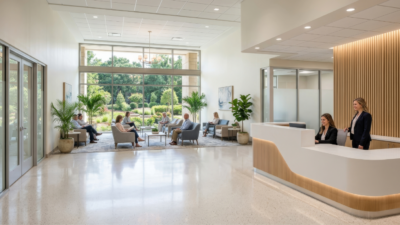
However, this shift is not just about proximity. Outpatient facilities are designed with ease in mind: streamlined check-in processes, modern waiting areas, and specialized layouts that reduce time spent on-site. As healthcare continues to embrace a more retail-like model, these attributes will only become more important.
Cost Efficiency and Value-Based Care
Healthcare providers are under constant pressure to balance quality outcomes with affordability. Outpatient care facilities help solve this equation by lowering operational costs. Procedures that once required inpatient stays can now be performed safely and effectively in ambulatory settings, often at a fraction of the cost.
The move toward value-based care further supports this trend. Payers and providers are incentivized to reduce unnecessary hospital utilization while maintaining high standards of care.
For healthcare providers and investors, the rise of outpatient care translates into significant opportunities. Unlike large hospital campuses that often require substantial capital investment and long lead times, outpatient facilities can be developed more quickly and cost-effectively. They also lend themselves to flexible real estate strategies, including adaptive reuse of retail or office properties.
This flexibility is particularly important as healthcare providers expand their networks to reach growing suburban and urban populations. By strategically placing outpatient facilities in high-demand markets, providers can improve accessibility while positioning themselves competitively.
The Future of Outpatient Development
Looking ahead, the trend toward outpatient care is unlikely to slow. The combination of patient demand for convenience, payer pressure for cost control, and ongoing medical innovations will continue to drive development. We will likely see:
- Growth of ambulatory surgery centers (ASCs): As more surgical procedures become suitable for outpatient settings. Per McKinsey, ASCs are projected to see a 7% annual revenue growth through 2028.
- Expansion into retail corridors: Repurposing former retail spaces into healthcare hubs to meet patients where they are.
- Integration with telehealth: Combining physical facilities with virtual care models for seamless patient experiences.
- Focus on specialized care: Outpatient oncology, orthopedics, and behavioral health centers are becoming more prevalent. Orthopedic outpatient revenue growth is projected at 32% by 2033, far surpassing the 5% inpatient revenue growth.
Outpatient care is reshaping the healthcare delivery model, and the real estate sector is key to supporting this transformation. For providers, it represents a strategic opportunity to expand their reach while improving operational efficiency. For patients, it delivers greater convenience, affordability, and access to care.
Read more in Colliers’ latest healthcare report: Factors Driving Success in the Outpatient Sector.

 Ron Goodin