What owners and operators should do now to protect asset performance, tenant experience, and business continuity
As forecasts indicate, we are currently experiencing a significant El Niño. Commercial real estate (CRE) owners and occupiers should be assessing how shifting weather patterns could affect asset performance, operating expenses, tenant experience, and business continuity.
Weather experts have indicated that this El Niño could strengthen into a “super” event by winter, potentially influencing temperatures, precipitation, storm activity, and hurricane patterns across the United States.
NOAA’s U.S. Winter Outlook reinforces that view and remains highly confident that a very strong event will be in place from December 2026 through February 2027.
The takeaway is clear: forecasts will continue to evolve, but preparation should begin now. For property owners and operators, the cost of readiness is almost always lower than the cost of recovery.
Why El Niño Matters to CRE
El Niño is a climate pattern characterized by warmer-than-average ocean temperatures in the Pacific Ocean that can influence weather conditions across North America. Larger events often produce shifts in rainfall, storm intensity, drought conditions, and temperature extremes. A very strong El Niño will likely shift the jet stream south and east this winter, tilting the odds toward stormier weather across the South. For owners, these weather shifts can create operational and financial challenges that directly affect asset value and tenant experience.
 John Scott
“El Niño is not a single-event weather occurrence. It is a prolonged weather pattern that creates very different challenges across regions.”
The Most Significant Risks
Increased flooding and water intrusion
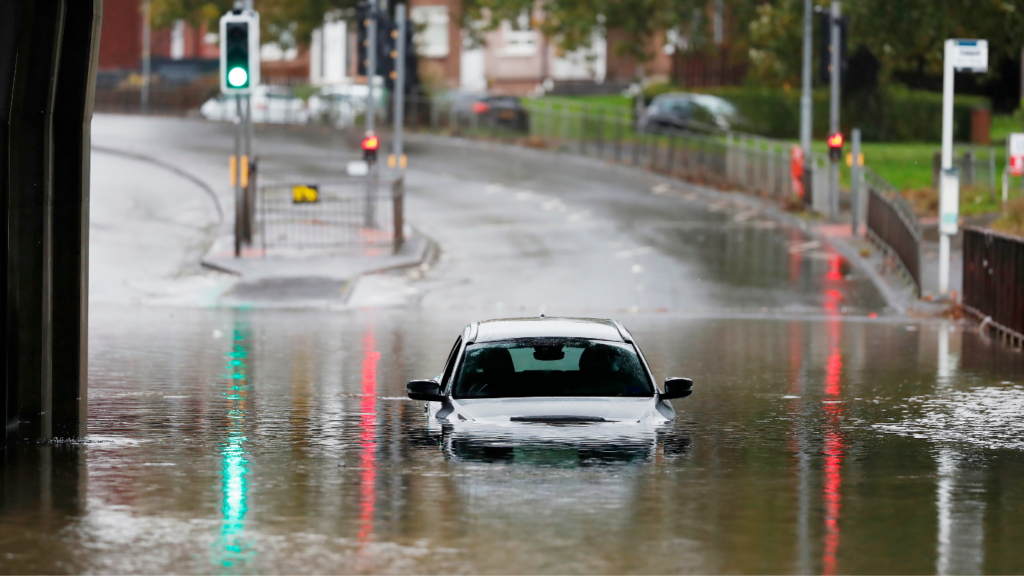
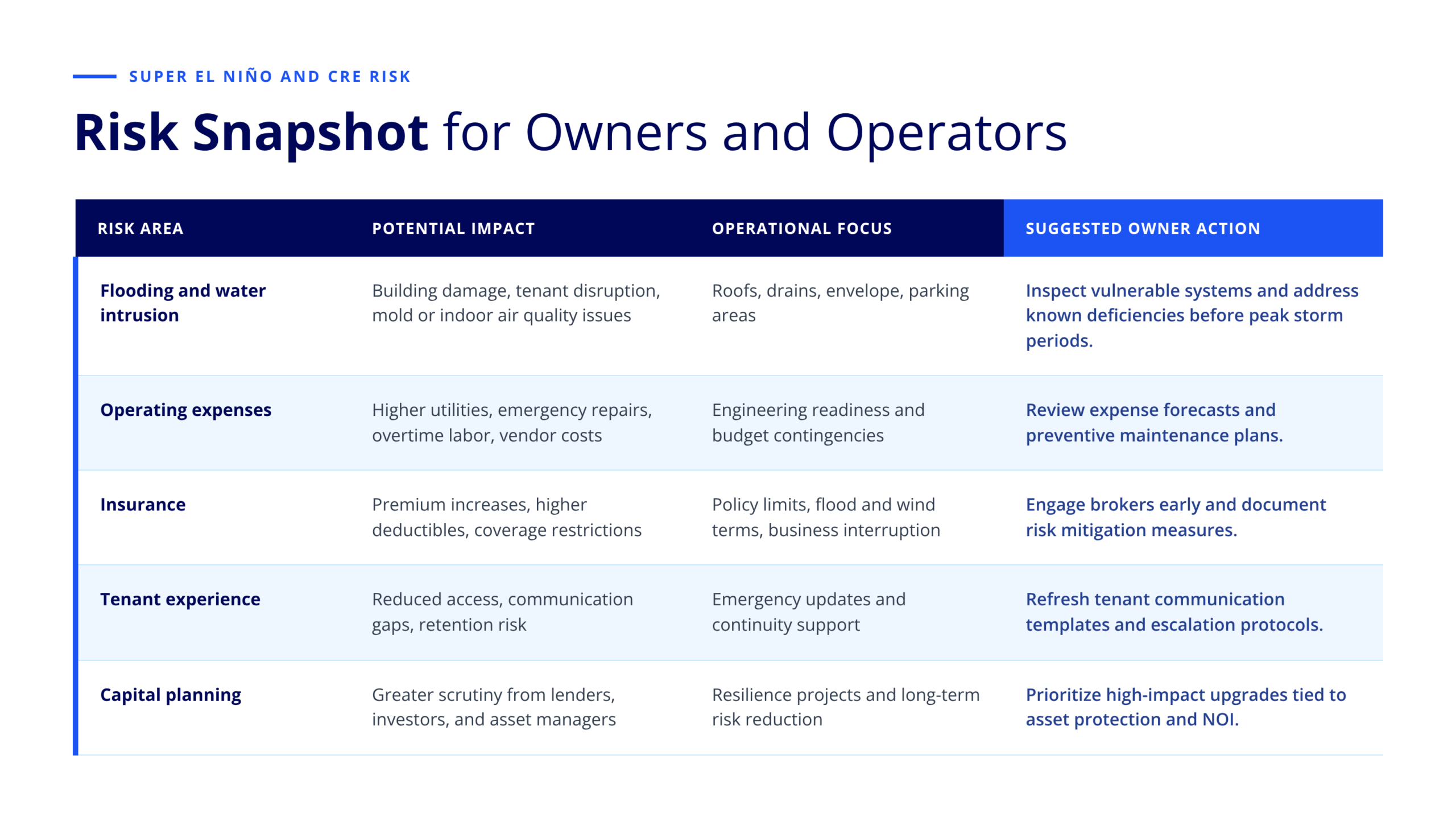
One of the most immediate concerns is the potential for heavier rainfall and more intense storm systems in certain regions of the country. Even properties outside designated flood zones may experience drainage failures, parking lot flooding, roof leaks, and water intrusion events. Beyond repair costs, water-related incidents can disrupt tenant operations, impact occupancy, and create longer-term issues such as mold remediation and indoor air quality concerns.
Higher operating expenses
Extreme weather places additional strain on building systems. HVAC equipment may operate longer during heat/cold events, while severe storms often generate unplanned maintenance costs and emergency service expenses. Property teams should anticipate increased utility consumption, higher maintenance and repair costs, greater demand for emergency response services, and additional staffing requirements during severe weather events.
Insurance market pressure
Commercial property insurance has already become more challenging and more expensive in many markets. A significant weather event can further impact underwriting requirements, deductibles, and premium costs. Owners should review property and casualty coverage limits, flood coverage adequacy, wind and storm deductibles, business interruption provisions, and vendor response plans.
 Karen Whitt
“Documenting property conditions before a weather event may become just as important as documenting damage afterward. Baseline records can help distinguish storm-related losses from pre-existing conditions during the claims process.”
Heavier snow and snow-loading risk
AccuWeather’s 2026–2027 winter forecast calls for above-average snowfall across the Sierra Nevada, Great Basin, Wasatch, and central Rockies, highlighting the importance of snow-load readiness and winter access planning in affected markets. For owners, heavier snow can create roof-loading concerns, parking and access challenges, freeze-thaw impacts, utility disruptions, and higher demand for snow removal and emergency vendor response. Properties in affected markets should review structural readiness, snow removal contracts, drainage pathways, backup power plans, and tenant communication protocols before winter conditions intensify.
Business continuity and tenant retention
Tenants expect more than physical space. They expect resilience. Building closures, power disruptions, inaccessible parking, and communication breakdowns can quickly erode tenant confidence. Conversely, properties that demonstrate preparedness often strengthen relationships during difficult circumstances. The most effective operators treat emergency preparedness as a tenant experience strategy rather than simply a risk mitigation exercise.
Building Resiliency Before the Next Storm
Property managers and owners do not need to predict the weather perfectly to prepare effectively.
Colliers’ property managers translate preparedness into action through disciplined, property-level planning. Before severe weather occurs, teams document baseline property conditions, confirm emergency contact and vendor lists, review roof, drainage, generator, elevator, stormwater, access, and life-safety systems, and identify areas where loose equipment, blocked drains, vulnerable roof components, or flood-prone access points could create avoidable disruption. As conditions intensify, readiness shifts to a time-sensitive operating cadence: validating access routes, communicating with owners and tenants, securing the property perimeter, confirming contractor availability, staging supplies, and preparing for rapid post-storm assessment before re-entry.
 Mark Parten
“Building resilience starts with the fundamentals. Owners should evaluate roofs, walls, windows, doors, drainage systems, and other critical building-envelope components before weather conditions deteriorate.”
Operational Readiness Before Weather Events
Best-in-class preparedness extends beyond the physical asset. It includes contractor relationships, emergency communication plans, disaster recovery procedures, supply-chain readiness, and tenant support protocols. Organizations that develop these capabilities before a weather event are better positioned to reduce disruption and support a coordinated recovery.
 Jeff Gerwig
“Preparation should focus on practical readiness, including emergency response plans, restoration partners, supply-chain contingencies, building inspections, and tenant communication strategies.”
Colliers’ property managers are taking proactive measures to identify vulnerabilities, strengthen operational readiness, reduce disruption, and protect asset performance before severe weather puts resilience to the test. Several practical actions can significantly reduce risk:
Conduct preventive property assessments
- Roof systems
- Drainage infrastructure
- Gutters and downspouts
- Building envelope components
- Parking structures
- Backup power systems
Update emergency response plans
- Emergency contact information
- Vendor response commitments
- Tenant notification procedures
- Escalation protocols
- Recovery planning processes
Strengthen tenant communications
- Situation updates
- Safety guidance
- Operational impacts
- Restoration timelines
- Available resources
Evaluate climate-related capital investments
- Enhanced drainage systems
- Roof upgrades
- Backup power improvements
- Smart building monitoring technology
- Water detection systems
- Flood protection measures
Partner Spotlight: HSB
Colliers partners with HSB to help commercial property owners reduce losses from water damage, frozen pipes, and other preventable building incidents. HSB’s Slim IoT sensors are small, battery-powered, and wireless.
They send data to a single on-site gateway using low-power, long-range connectivity. There is no cabling, no conduit, no drilling, and no integration with the building automation systems. A deployment of 100 sensors with a single gateway usually requires roughly $2,350 in hardware (one-time), plus $2,000 per year for monitoring.
Capital Planning and Building Hardening
Many owners acknowledge the importance of resilience improvements, but must prioritize them against competing capital demands.
Relatively modest investments in roof improvements, drainage systems, code compliance, emergency power, building-envelope performance, and preventive maintenance can support meaningful risk reduction. Asset-level risk assessments can also help identify vulnerabilities and inform phased capital priorities.
Technology Partnership Spotlight: Roof Intelligence Before the Storm
Colliers is partnering with Legacy Technology Lab to help owners proactively document roof conditions before severe weather occurs. Through drone-based assessments, Legacy can identify moisture intrusion, separated seams, flashing damage, drainage concerns, and other hidden vulnerabilities.
The resulting baseline and recurring inspection records can support capital planning, claims documentation, and insurance renewal discussions. In a tightening insurance market, better documentation may help demonstrate active risk management and reduce uncertainty around premiums, deductibles, or coverage restrictions.
Owner Takeaway: Better roof intelligence today can support stronger asset protection and insurance readiness tomorrow.
Looking Ahead
Whether this year’s forecast develops into a true “super” El Niño or a more moderate event, the underlying lesson remains the same: climate-related risks are becoming an increasingly important factor in commercial real estate operations and asset management.
In an environment where tenant expectations, insurance markets, and climate-related risks continue to evolve, resilience is no longer simply a facilities issue. It is a business strategy.
The most successful owners will not be those who react fastest after a storm. They will be the organizations that prepared before one arrived.
If your property manager has not yet initiated these steps, now is the time to act. Colliers Real Estate Management Services brings the operational expertise, market insight, vendor discipline, and tenant communication experience owners need to strengthen preparedness, reduce disruption, and protect long-term asset performance before severe weather puts resilience to the test.
Sources and Editorial Note
USA TODAY article: Super El Niño 2026 is here. What it means and what could happen. Published June 15, 2026.
NOAA news release: El Niño looms large over U.S. Winter Outlook (noaa.gov). Published October 15, 2026.

 Marianne Skorupski

 Joe Fetterman
 Jeffrey Myers
 David Burden
 Frank Petz