
 Nicole Larson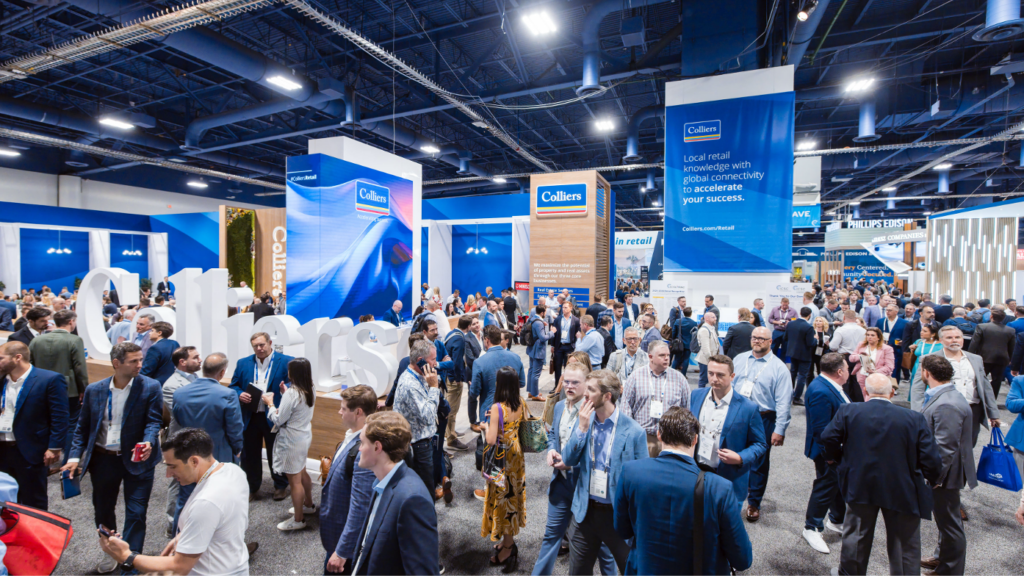
The ICSC Las Vegas 2026 convention brought together more than 25,000 retail and commercial real estate professionals for three days of deal-making, networking, and forward-looking conversations shaping the future of the industry. This year’s event placed a strong emphasis on innovation, leadership, and community-building, highlighted by the debut of the ICSC+PROPTECH pavilion focused on AI and emerging technologies, alongside the inaugural ICSC+WOMEN IN CRE experience designed to foster mentorship and professional growth.
Keynote speakers Randi Zuckerberg, Erin Andrews, and Mike “Coach K” Krzyzewski set the tone with lessons on resilience, preparation, culture, and leadership — themes that closely mirrored the transformation taking place across retail real estate today.
Here is a recap of the key conversations and trends that defined ICSC Las Vegas 2026:
- Frictional Leasing is Reshaping Competition for Space: Retailers are no longer waiting for vacancies to hit the market. Brands are actively pursuing occupied storefronts, negotiating early exits, or structuring subleases to secure prime locations before they officially become available. In today’s low-vacancy environment, competition for quality space has become increasingly aggressive. At the same time, some retailers noted they are becoming more flexible with lease structures, pursuing shorter-term three-year deals to test new markets, validate performance, or establish an early foothold in high-demand locations before making longer-term commitments.
- AI is Rapidly Becoming a Retail Necessity: AI was one of the defining themes of ICSC Las Vegas 2026, reinforced by the launch of the new ICSC+PROPTECH pavilion. Industry leaders noted that nearly 50% of shoppers now use AI for product recommendations, while roughly 75% say it heavily influences purchasing decisions. Retailers and landlords that fail to integrate AI into operations, customer experience, and physical spaces risk falling behind as technology becomes embedded into everyday commerce.
- The Economics of New Retail Development Continue to Constrain Supply: Developers emphasized that speculative retail construction remains challenged by elevated construction and financing costs. In many markets, projects now require blended rents exceeding $30 to $40 per square foot to justify development, while national asking rents remain closer to the mid-$20s, leaving a significant gap between replacement costs and achievable market rents. As a result, low availability is increasingly becoming a long-term operating reality rather than a temporary cycle, with former big-box vacancies, redevelopment projects, and repositioned centers remaining among the primary sources of new retail space entering the market.
- Retail Investment Demand Continues to Intensify: Investor appetite for retail remains strong, particularly for grocery-anchored and well-located neighborhood centers, which continue to attract some of the most competitive bidding activity across the market. In high-growth Sun Belt markets, demand for quality retail assets continues to outpace supply, as capital flows back into the sector despite ongoing concerns about tariffs, interest rates, political uncertainty, and the long-term impact of artificial intelligence on the economy. Top-tier grocery-anchored centers in prime markets are now trading at cap rates in the low-to-mid 5% range, while power center valuations remain more variable and heavily dependent on the strength and stability of anchor tenants.
- Consumers are Prioritizing Value, Convenience, and Experience: Retailers reported increased visits to nondiscretionary and value-oriented retail as consumers remain highly selective with spending. Shoppers are increasingly willing to make multiple stops or travel farther distances to find the best combination of price, convenience, and experience rather than relying solely on one-stop shopping trips.
- Retailers are Becoming More Flexible About Real Estate: The shortage of Class A retail space is pushing more retailers to reconsider Class B and C locations. At the same time, landlords are exploring adaptive reuse strategies, converting underutilized retail space into medical, educational, coworking, and service-oriented uses rather than pursuing costly demolitions and redevelopments.
- Consumers Remain Resilient Despite Mounting Economic Pressure: Retail leaders repeatedly pointed to a growing disconnect between consumer sentiment and spending behavior. While the University of Michigan Consumer Sentiment Index fell to a fresh 74-year low in May amid concerns surrounding inflation, tariffs, and rising gas prices, retail sales and foot traffic continued to grow throughout Q1 2026. Industry discussions highlighted that many consumers are becoming increasingly value-conscious and selective with discretionary purchases, while still prioritizing experiences and smaller indulgences — a trend some described as “consolation spending.” At the same time, rising global food prices and inflationary pressures are expected to place additional strain on household budgets in the second half of the year.
- Experience and Services are Driving Leasing Activity: Experiential and service-oriented tenants continue gaining market share across shopping centers nationwide. Fitness concepts, entertainment venues, wellness brands, coworking operators, and other service-based users now account for a growing share of leasing activity as landlords increasingly prioritize traffic-driving and community-oriented uses.
- Community-Centric Development is Becoming a Competitive Advantage: Developers repeatedly emphasized that future retail projects must offer more than transactional shopping. Green space, gathering areas, wellness amenities, and community-focused environments are increasingly viewed as essential components of modern retail development as landlords compete to create destinations that foster longer visits and deeper consumer engagement.
- Technology-Forward Retail Real Estate is Attracting More Capital: Investors are increasingly prioritizing retail assets that integrate technology, data, and enhanced tenant experiences into their operations and environments. More than half of investors plan to increase their real estate capital allocations this year, up from 2025, with much of that capital targeting properties embracing AI, PropTech, and data-driven strategies.

 Anjee Solanki