

 Pride Snow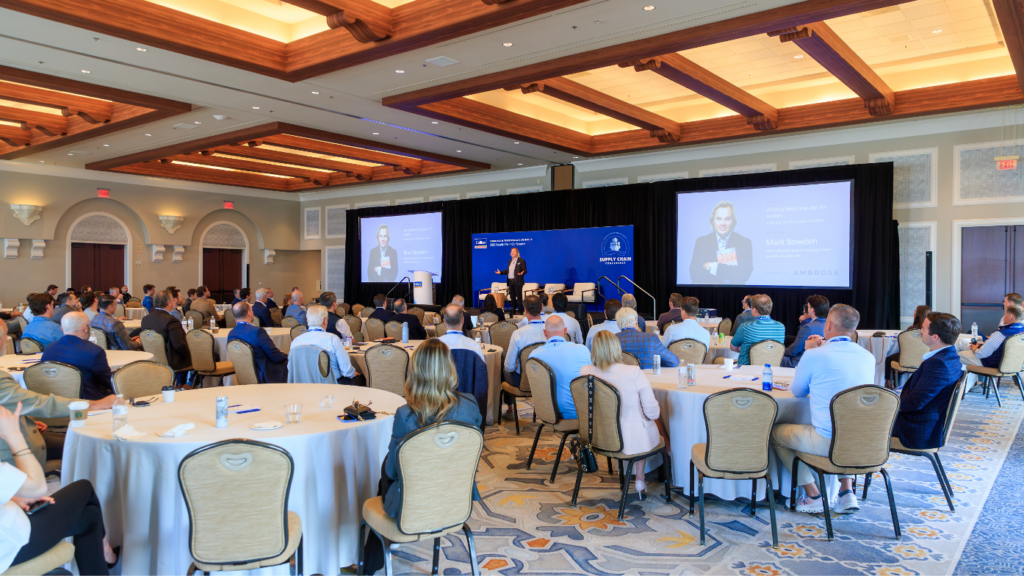
The 2026 Colliers Logistics & Transportation (L&T) Supply Chain Conference brought industry leaders from across North America together in Huntington Beach, CA. The energy and sentiment of the conference-goers proved to be in sync with the breezy California beach conditions. After a stretch defined by rapid expansion, aggressive development, and oversupply concerns, the mood has shifted in a positive and healthy direction. The traditional pillars of discipline, execution, and long-term operational strategy remain at the forefront, and while it might not feel like 2021, it feels as good as it has in years to be in industrial real estate.
Calculated decision-making is still present, but it is no longer driving every decision. Activity continues across the market, particularly among large-scale occupiers, as tenants become more focused on how facilities streamline operations rather than simply adding footprint. Developers are leasing space and building more with a keen focus on risk-adjusted returns.
A Shift Toward Precision
As Craig Hurvitz, Director, National Industrial Research at Colliers | U.S., noted during the conference, the industrial sector has moved through a full cycle in a relatively short period of time. What is emerging now is a more balanced market and a more intentional approach to leasing decisions.
Leasing activity has become increasingly diversified. Third-party logistics providers continue to account for a significant share of demand at roughly 32%, while manufacturing activity is gaining momentum. Data center demand is also creating spillover effects for the broader industrial market. E-commerce continues to serve as a macro tailwind for the industry, as consumers expect fast delivery as a norm.
Panelists from DHL, Reece, Link Logistics, and Grainger emphasized that conversations are more focused on operational performance. Facilities are being evaluated based on throughput, automation capabilities, labor access, and infrastructure readiness.
Power availability has become one of the most important factors in site selection. DHL noted that some of their more specialized facilities now require a minimum of 15,000 amps, and engaging utility providers early is now standard.
Reece continues to favor longer lease terms to create stability, while Grainger’s self-development strategy reflects its need for operational control to accommodate heavy automation and customization. Occupiers appear to have less sticker shock around rents generally, but tariffs and cost uncertainty are affecting their bottom lines.
Growth Shaped by Infrastructure and Capital
Southern California remains one of the country’s most influential industrial markets, with more than half of venture capital investment flowing into aerospace, defense, and advanced manufacturing industries. That activity has contributed to roughly five million square feet of leasing demand across the region. The Ports of Los Angeles and Long Beach also continue to serve as critical gateways for global trade, handling approximately $301 billion (17% of the nation’s cargo volume).
Savannah is the third largest port in the U.S. and the fastest growing. Their primary competitive advantage is port capacity and speed in processing containers. China represented 43% of Savannah’s business in 2021; now it’s approximately 32%, reflecting diversification toward other Asian trading partners. Meanwhile, Laredo has emerged as a key inland logistics hub, facilitating roughly 40% of U.S.-Mexico trade. Historically, Laredo was mainly a transload market, but it is now seeing distribution demand emerge. Though Laredo serves as the main artery for the automotive industry, it’s now also bringing in advanced technology products as Mexico’s exports of data center equipment have increased dramatically.
A Stable but Uneven Economic Backdrop
The broader economic environment remains relatively stable, though pressure points are beginning to emerge.
As Steig Seward, Senior Director, National Research at Colliers | U.S., shared, many employers are operating in what he called a “no hire, no fire” environment. Companies are holding onto existing talent but slowing hiring activity as they wait for greater economic clarity. That approach has helped maintain stability across the labor market, even as consumer sentiment remains soft.
Spending patterns are also becoming more uneven. Higher-income households now account for more than half of overall consumer spending, reinforcing the widening divide in purchasing behavior across income groups. Meanwhile, job growth has moderated. Following April 2025, only 11,600 jobs were added, reflecting a more cautious stance from employers. None of these indicators point to immediate disruption, but they do reinforce how sensitive the market remains to economic and policy changes.
Big Box is Back
Developers NorthPoint Development and VanTrust, along with LP capital provider PCCP, noted that many of their bulk vacancies have now been absorbed. Occupiers have come off the sidelines and are once again committing to bulk space. On the spec development side, the 200,000–250,000 SF range appears oversupplied at the moment, so developers are largely avoiding that size range for now. PCCP noted there is enough dry powder in the system to pursue value-add and opportunistic plays — and that spec development is back on the table, though market selection remains critical. The Southeast, Midwest, and Texas are the most desirable markets right now. VanTrust also highlighted its interest in U.S.-Mexico border markets, including Yuma, Laredo, and El Paso, to capitalize on growing cross-border trade activity.

 Shawn Machado
 Craig Hurvitz