


- Housing availability is improving, but affordability remains constrained.
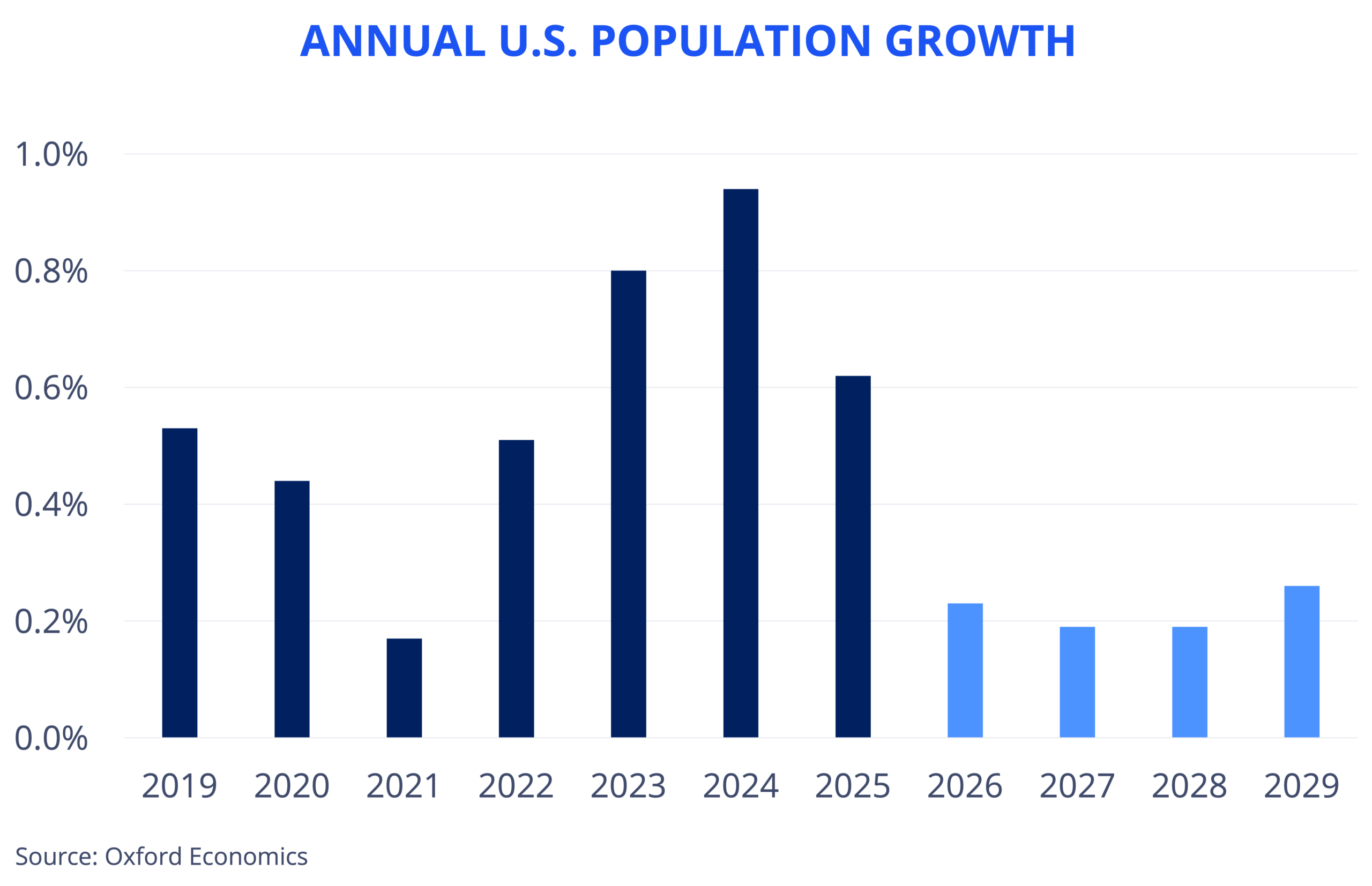
- Slower job growth and immigration are weighing on household formation.
- “Accidental landlords” are adding incremental rental supply.
- Longer-term balance depends on expanding lower-cost housing options.
Housing market conditions are gradually moving away from the extreme tightness that defined the post-pandemic period. Although most estimates still indicate that the U.S. is structurally underbuilt by several million housing units, recent housing stock growth has outpaced population growth, lifting vacancy rates and improving availability across both rental and for sale inventory. For multifamily, these conditions create a two-sided outlook: added supply and slower household formation may pressure near-term fundamentals, while persistent barriers to homeownership should continue to support rental demand.
Affordability remains the primary constraint on demand. Elevated home prices and mortgage rates continue to sideline many potential buyers. According to Oxford Economics, a household earning the median income has only 76% of the income needed to afford a median priced home. As a result, improved availability has translated mainly into slower price and rent growth rather than a meaningful rebound in housing transactions.
Rental supply is also being supplemented by so called “accidental landlords,” homeowners who bought or refinanced during the ultra low rate period and are increasingly choosing to rent rather than sell. This trend is adding incremental inventory and pushing vacancy rates higher in some markets.
 Steig Seaward
Homeowners choosing to rent rather than sell are adding incremental supply and contributing to near-term multifamily pressure.
Overall, these dynamics point to near-term softness in multifamily fundamentals without undermining the sector’s longer-term demand outlook. Slower household formation, rising vacancy, and added rental supply from both new deliveries and accidental landlords are likely to weigh on absorption and rent growth in the short run. Over time, however, persistent affordability constraints should keep many households in the renter pool longer, supporting multifamily demand. A more sustainable housing balance will still depend on expanding the stock of lower cost housing.


 Will Mathews
 Mike Kidd
 Ryan Chapman